Significantly reduce
treatment costs with Cetacaine® needle-free liquid anesthetic
As a dental office manager, balancing patient care with budget considerations is crucial. Cetacaine provides a cost-effective solution that meets both needs, ensuring optimal patient comfort and efficiency in your practice.
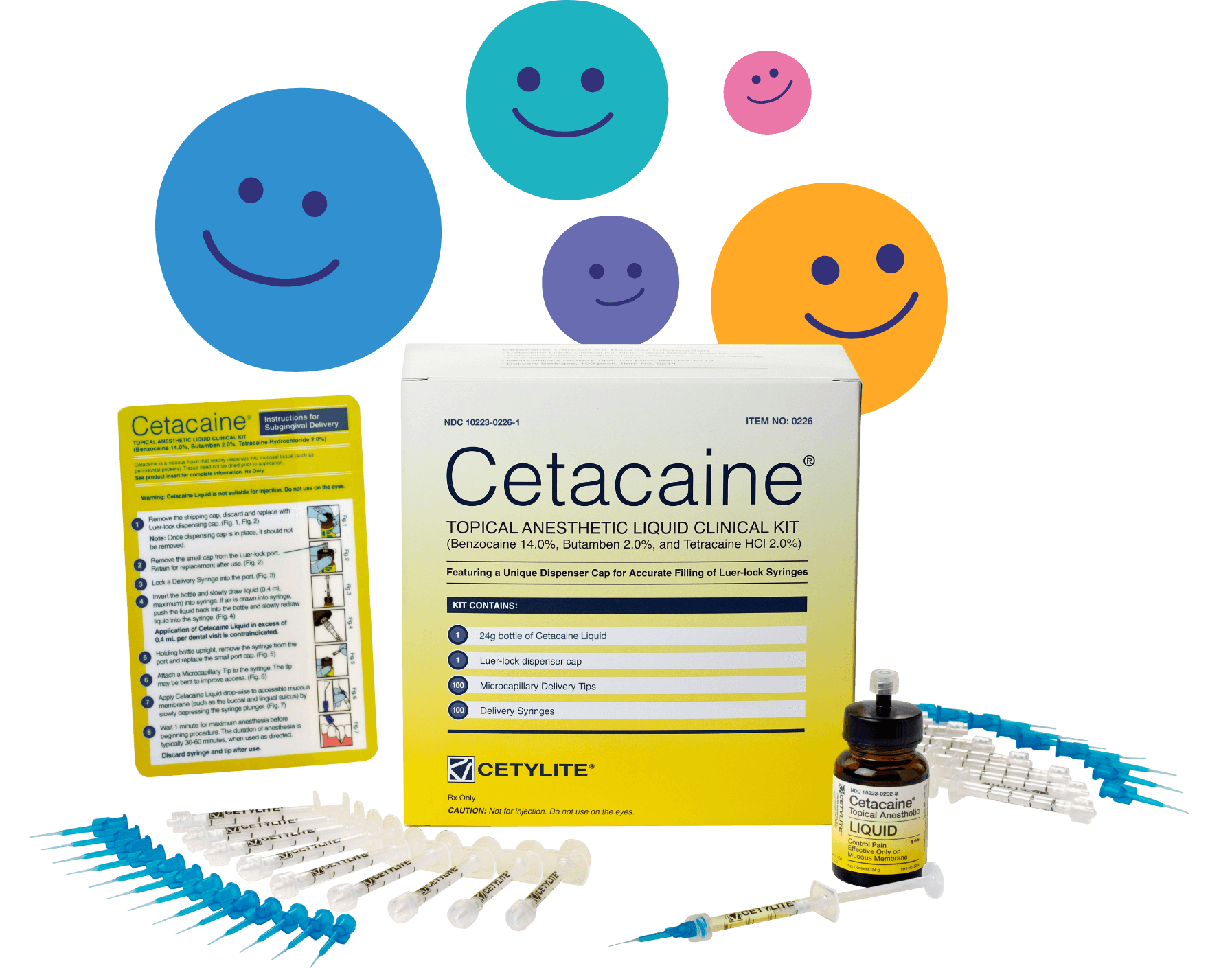
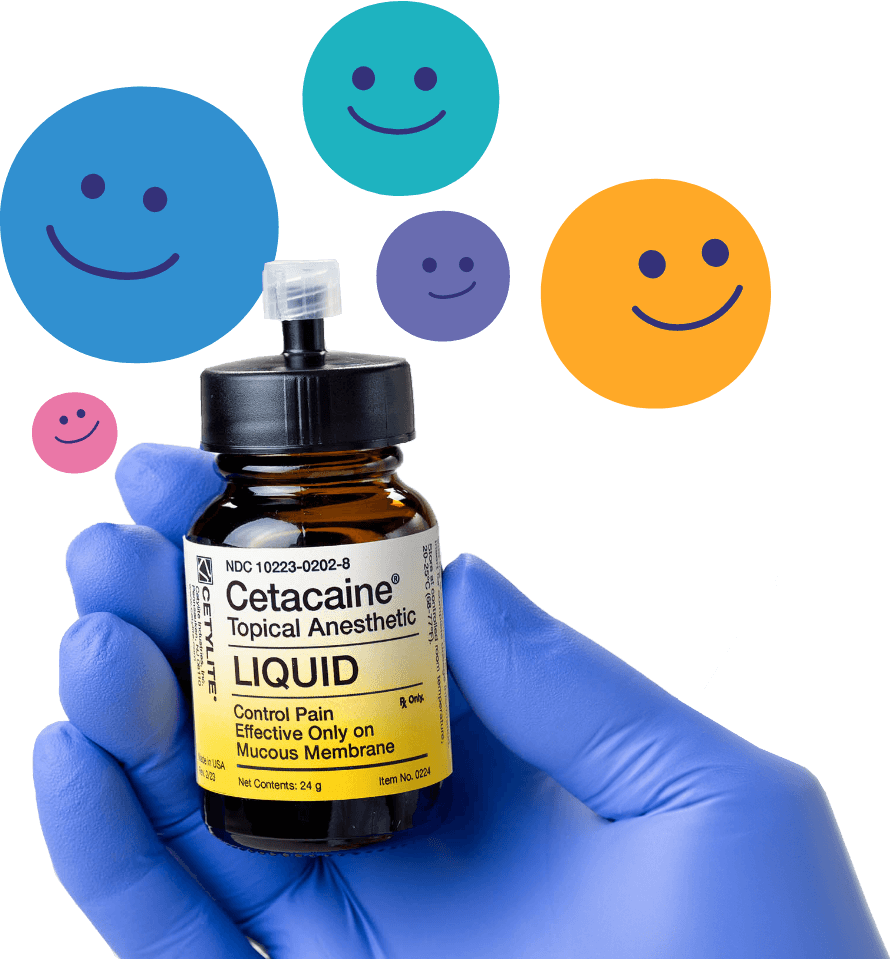
Cetacaine is no ordinary topical. Unlike OTC benzocaine gels or prefilled compules, Cetacaine Liquid is three anesthetic agents in one. Designed for periodontal applications, this special formula provides the duration and viscosity required for periodontal procedures, such as scaling and root planing. Tiny drops of viscous liquid are easily applied into periodontal pockets, readying patients in seconds for needle-free treatments that they will appreciate and return for.
Cetacaine’s long-lasting anesthesia and efficient multi-dose bottle help to streamline your hygiene department’s workflow, making it the smart choice for dental practices focused on excellence and cost savings.
Why Cetacaine® makes economic sense for your practice:






long duration, small dose Exclusive formula produces up to 60 minutes of anesthesia meaning more treatments with less anesthetic, compared to prefilled brands which last up to 20 minutes and often require reapplication.

“As a Registered Dental Hygienist and office manager at a community Health Center, it is of utmost importance to provide our patients with the best care. The use of Cetacaine helps our hygienists provide care to patients who need anesthesia but have the fear of local anesthesia. This product is effective and very efficient! This allows our patients to have significantly less anxiety which leads to more compliance with their appointments and planned treatment.”
Cetacaine®
There is no comparison
Unlike most topicals, like OTC benzocaine gel or lidocaine/ prilocaine products, Cetacaine has a long duration, keeping patients comfortable for up to 60 minutes. There are no blunt metal tips or bulky applicators. The feather-light syringe and flexible, ultrafine applicator tip makes application precise, efficient and pleasant.
Find out more reasons by downloading our comparison chart.
Download Download
See why Cetacaine® is the preferred needle-free anesthetic among dental hygienists for soft tissue procedures without an injection

Brief Summary of Prescribing Information
INDICATIONS: Cetacaine is a topical anesthetic indicated for use on all accessible mucous membrane where pain control is required, except the eyes.
WARNINGS/
Methemoglobinemia: Cases of methemoglobinemia have been reported in association with local anesthetic use. Do not exceed maximum dose. If a patient shows signs of methemoglobinemia, discontinue Cetacaine and any other oxidizing agents. Depending on the severity of the symptoms, patients may respond to supportive care, i.e., oxygen therapy, hydration. More severe symptoms may require treatment with methylene blue, exchange transfusion, or hyperbaric oxygen.
ADVERSE REACTIONS: Adverse reactions, such as hypersensitivity, including anaphylaxis, are rare. Discontinue use if rash or allergic reactions develop. The most common adverse reaction caused by local anesthetics is contact dermatitis. Cetacaine should not be applied for prolonged periods except under continual supervision.
PEDIATRIC/PREGNANCY/
CONTRAINDICATIONS: Do not use Cetacaine to treat infants or children younger than 2 years. Do not inject or use in the eyes. Cetacaine is contraindicated in patients who are hypersensitive to any of its ingredients or are known to have cholinesterase deficiencies. To avoid excessive absorption, Cetacaine should not be used under dentures or cotton rolls, as prolonged contact may cause an escharotic effect. Routine topical anesthetic precautions should be observed.
For complete prescribing information visit www.cetacaine.com.